(엠바고 없음 | 코멘트 3차) 초대형 자연 재해, 기후와 빙하학 관점 전문가 의견 26-102(Ver.3) 네팔-티베트 국경 돌발홍수와 산사태
2026.8.27. **엠바고 없음** 13:20 코멘트 추가
|
|
|
-
- 26일 오후, 네팔 수도 카트만두에서 북쪽으로 120km 떨어진 북부 국경지대 라수와 지역과 티베트 자치구에서 대형 돌발 홍수와 산사태가 발생했습니다.
- 27일 오전 5시 뉴욕타임스에 따르면, 이번 범람과 산사태로 최소 160여 명의 사망자가 발생했고 수백 명 이상이 실종 상태입니다.
- 실종자 가운데에는 관광객을 포함해 수백 명의 외국인이 포함돼 있으며, 한국에서도 수력발전소 건설을 위해 상주하던 인원 가운데 9명이 연락 두절 상태에 놓였습니다.
- 사태 당시를 촬영한 영상을 보면, 거대한 산사태로 형성된 거대한 토사가 물과 함께 강을 따라 범람하며 인근 마을과 도로, 건물을 휩쓸었습니다. 급류에 다리가 붕괴한 곳도 있었습니다.
- 일부 초기 조사 결과에서, 이번 산사태와 홍수가 고지대에 위치하던 빙하가 쏟아져내리며 발생한 얼음사태에 의해 촉발됐다는 주장도 나오고 있습니다.
|
|
|
기자 여러분은 아래 주의사항을 참고해 활용해주시길 부탁드립니다.
- 엠바고는 없습니다. 자유롭게 활용 가능합니다.
- 되도록 원문을 그대로 활용해주시길 부탁드립니다.
- SMCK를 꼭 인용할 필요는 없습니다. 만약 인용 출처가 필요한 경우, 아래 형식을 따를 수 있습니다.
- "ㅇㅇㅇ(전문가)는 한국과학기술미디어센터에 ㅁㅁㅁ라고 말했다."
|
|
|
진경 극지연구소 정책협력부장・세계기후연구계획(WCRP) 기후와 빙권(CliC) 과학운영위원회 위원
*2026.8.27. 13:20 추가
이번 재난의 직접적인 원인을 기후변화와 곧바로 연결 짓기에는 정밀한 원인 규명과 귀인 분석이 필요하다. 그러나 전 지구적 온난화와 함께 빙하가 빠르게 후퇴하면서 빙하호 붕괴홍수, 대규모 얼음사태, 빙하성 토석류 등 새로운 위험이 발생하거나 기존 위험이 증폭되고 있다는 점은 주목해야 한다. 실제로 2000~2023년 전 세계 빙하는 연평균 약 2,730억 톤의 질량을 잃었으며, 2022~2024년에는 관측 이래 가장 큰 3년 연속 빙하 질량 손실을 기록했다.
더 주목해야 할 점은 이러한 고산 빙권의 변화가 산악지역에만 머물지 않는다는 사실이다. 히말라야와 티베트고원을 포함하는 이른바 ‘제3의 극지’는 아시아 주요 하천의 발원지로, 이곳에서 시작되는 하천들은 약 20억 명에게 필수적인 물을 공급한다. 따라서 고산 빙하의 변화는 단순한 얼음의 소실을 넘어, 산악지역에서 시작된 위험이 하천을 따라 하류의 인구와 사회기반시설로 전달되는 ‘연쇄적 영향’의 관점에서 바라볼 필요가 있다.
참고자료
WMO, Glacier melt will unleash avalanche of cascading impacts
WMO, Glaciers and Ice Caps
UN-Water & UNESCO, The United Nations World Water Development Report 2025: Mountains and Glaciers – Water Towers
jin@kopri.re.kr |
|
|
최명기 대한민국산업현장교수단 교수
*2026.8.27. 09:40 추가
이번 참사는 위험이 조용히 쌓이다가 어느 한순간 걷잡을 수 없이 터져 나온 사고다. 보도에 따르면 해발 5,200m 고지에서 거대한 빙하 덩어리가 무너져 내렸고 이 얼음과 바위가 강을 막아 일종의 '임시 댐'을 만들었다. 이 댐이 무너지면서 그동안 갇혀 있던 물과 흙, 돌이 한꺼번에 하류로 쏟아진 것으로 보인다. 실제로 트리술리강 하류에서는 불과 30분 만에 수위가 9m나 상승했다. 건물이 무너질 때 위험이 서서히 쌓이다 한순간에 터지는 것과 같은 원리가 자연에서는 이런 방식으로 나타난 셈이다.
기후위기는 바로 이 '임시 댐의 재료'인 빙하 자체를 점점 불안정하게 만들고 있다. 히말라야 지역에서 빙하가 원인이 된 홍수는 2000년대만 해도 5~10년에 한 번 정도였으나 최근에는 한 해에도 여러 차례 발생할 만큼 잦아지고 있다. 위험이 일어나는 빈도 자체가 달라지고 있는 것이다.
가장 안타까운 지점은 '위험을 감지하는 것'과 '사람을 실제로 대피시키는 것' 사이의 간극이다. 무너지기 전에는 크든 작든 이상 징후가 나타나기 마련이나 이를 곧바로 대피 행동으로 옮기지 못하면 참사로 이어진다. 국내 여러 붕괴 사고에서도 반복적으로 확인된 패턴이다.
대응책은 예측-예방-감시-경보-대피의 다섯 단계를 하나의 체계로 통합해 갖춰야 한다. 우선 유역 단위의 통합 수방대책이 선행되어야 한다. 상류의 빙하호·계곡·급경사지 같은 위험원과 하류의 주거지·도로·교량·관광시설을 하나의 유역으로 묶어 홍수위험지도를 작성하고 위험원별로 정기적인 재해영향평가를 실시해 어느 지점이 임계 위험 구간인지 사전에 특정해 두어야 한다. 이런 기초 조사 없이 계측기만을 설치하는 것은 어디에 무엇을 감시해야 하는지 모른 채 계측 장비를 늘어놓는 것과 다르지 않다.
감시 단계에서는 상류 취약 구간에 초음파식·레이더식 수위계, 지반 변위계, 진동·음향 센서 등을 IoT 방식으로 설치해 실시간 원격 전송 체계를 갖추어야 한다. 특히 빙하호나 얼음사태처럼 접근이 어려운 고지대는 위성·드론 영상과 지상 센서를 함께 활용하는 빙하호 붕괴 홍수(Glacier lake outburst flood, GLOF) 특화 조기경보체계가 필요하다. 이렇게 수집된 실시간 자료는 유역별 홍수추적모형(수리·수문 모델)에 입력해 상류에서 이상 신호가 발생했을 때 그 물이 하류 특정 지점까지 도달하는 데 걸리는 시간, 즉 홍수 도달시간을 사전에 산정해 두어야 한다. 여기에 실시간 수문 자료를 지속적으로 반영해 갱신되는 인공지능 기반 수위 예측 모델을 결합하면 통상적인 강우성 홍수와 이번처럼 빙하 붕락·산사태에서 비롯한 돌발홍수를 구분해 대응 강도와 경보 단계를 차등화할 수 있다.
다만 아무리 정교한 감시·예측 체계를 갖추어도 그 신호를 즉각적인 행동으로 전환하는 비상연락체계가 없다면 실효성을 갖지 못한다. 계측값이 사전에 설정된 임계치를 초과하면 주의보-경보-위험경보의 단계별 기준에 따라 관할 기관과 주민에게 자동으로 경보가 전파되는 체계를 구축해야 하며 재난문자(CBS)·마을 사이렌·현장 방송 등 중복 채널을 병행해 통신 장애 상황에서도 경보가 끊기지 않도록 이중화해야 한다. 아울러 현장 책임자가 상급 기관의 승인을 기다리지 않고 즉시 대피·통제를 지시할 수 있는 권한과 절차를 사전에 명문화해 두는 것이 중요하다. 재난 현장에서는 보고와 승인을 거치는 사이의 몇 분이 생사를 가르기 때문이다.
마지막으로 이 모든 체계는 정기적인 대피 훈련을 통해 실제로 작동하는지 검증해야 완성된다. 대피로와 대피소를 사전에 지정하고 관광객·외국인 등 지리에 익숙하지 않은 인구를 고려한 다국어 안내 체계를 마련하며 도상훈련과 실제 대피훈련을 병행해 경보 발령부터 대피 완료까지 걸리는 시간을 주기적으로 측정하고 단축해 나가야 한다. 산지가 많은 한국도 예외는 아니다. 산사태 위험 지역과 계곡 상류의 저수 구조물을 상시 계측하고 이상 신호가 지체 없이 경보와 대피로 이어지는 체계를 구축한 뒤 반복 훈련으로 검증해 두는 것이야말로 이번 네팔 사례가 주는 가장 실질적인 교훈이라고 본다.
c95019@naver.com |
|
|
안진호 서울대 미래혁신연구원 빙권과학교육연구센터장・지구환경과학부 교수
*2026.8.27.
이번 대형 돌발홍수의 주요 원인으로 빙하 용융이 주목받고 있다. 산사태, 여름철 강수량 증가, 빙하호 범람 등도 홍수의 원인으로 거론되고 있지만, 근본적으로는 온실가스 배출 증가에 따른 지구온난화로 빙하와 적설이 빠르게 녹은 것이 주요 원인으로 볼 수 있다. 최근 지구온난화로 빙하의 용융 속도가 더욱 빨라지고 있으며, 외신 보도에 따르면 네팔 인근 히말라야 지역의 빙하 용융 속도는 2000년 이전에 비해 약 두 배 빨라진 것으로 나타났다. 앞으로도 지구온난화가 지속될 경우 이와 같은 대형 기후재난이 더욱 빈번하게 발생할 것으로 예상된다.
한편, 고산빙하는 물을 고체 상태로 저장해 두었다가 녹은 물을 지속적으로 공급하는 중요한 역할을 한다. 전 세계 인구의 약 6분의 1이 고산지대의 빙하와 눈이 녹아 만들어진 물에 의존하고 있으며, 히말라야산맥 주변 지역이 대표적인 사례다. 그러나 지구온난화로 빙하와 적설이 빠르게 감소하고 결국 상당 부분이 사라지게 되면, 단순히 홍수 위험이 증가하는 데 그치지 않고 식수와 농업용수 확보에도 심각한 문제가 발생할 수 있다. |
|
|
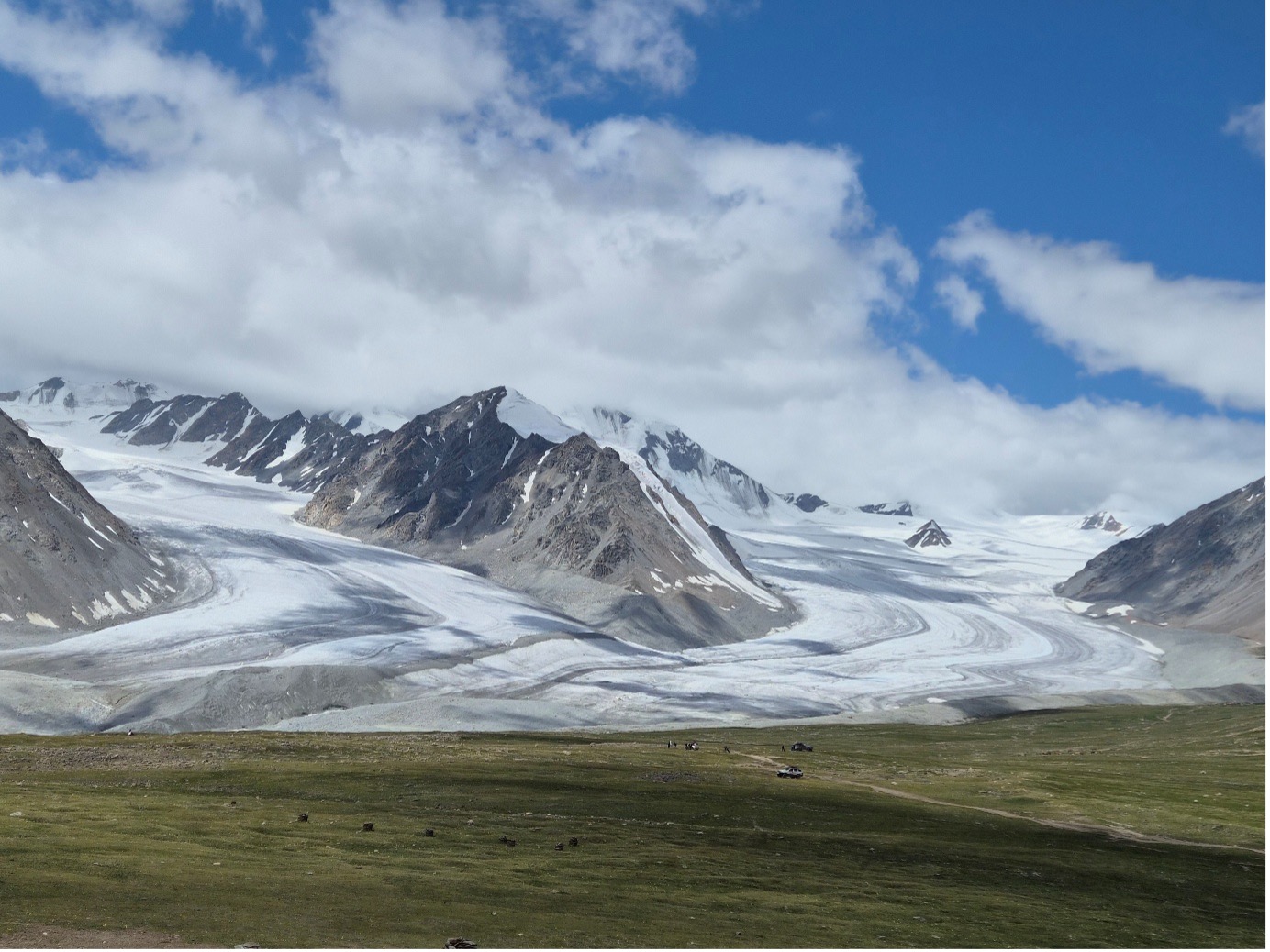
그림 1. 몽골 알타이산 인근 빙하. 몽골 서부지역에서는 빙하와 동토의 용융 속도가 급속히 빨라지는 모습이 관찰되고 있다.
jinhoahn@snu.ac.kr |
|
|
아래는 영국 사이언스 미디어 센터(UK SMC)에서 수집한 전문가 의견입니다. 영국 SMC 홈페이지에서도 보실 수 있습니다. |
|
|
Dr Fatima M. Pillosu, hydrometeorologist and flash floods researcher from the Department of Meteorology, University of Reading, said:
“Everyone in a mountain valley faces the same hazards, but tourists are more vulnerable because they may not recognise the danger or understand local warnings. Visitors from regions where such events are rare may not appreciate how fast a mountain river can rise, nor that these valleys also face avalanches, landslides and floods from melting glaciers, even in dry weather. Knowing in advance what can happen, and what to do if it does, is one of the most useful protections.
“A flood thick with mud and rock can be even more lethal than a rain-fed flash flood. Both can strike with great force and speed and carry boulders and debris along. Fast flowing water can easily pick up anything in its way and carry it off downstream. Mud simply buries people. The moving mass is much heavier than water, and it grows heavier as it travels, scouring soil, gravel and boulders from the riverbed and banks and carrying them along.
“The boulders it carries can destroy buildings and bridges that a water flood might have left standing. When the flow stops, the mud and rock settle into a dense mass that is hard to dig through, making rescue even slower and more difficult.”
Dr Jeff Da Costa, Researcher in Hydrometeorological Hazards, Early Warning & Disaster Risk, University of Reading, said:
“For early warning, you do not always need to know exactly what has happened upstream before taking action downstream. A sudden and unusual change in the river can be enough to warn communities while the cause is being established.
“This is particularly important because the same river corridor experienced a major flood originating in Tibet in July 2025. After that event, Nepalese flood forecasting officials said they had received no advance warning from China and that there was no mechanism in place for sharing that information. Nepal subsequently committed to strengthening coordination with China. We do not yet know what information was available before today’s flood, when it became available or how it moved across the border. Establishing that timeline will be important, including what changed after the 2025 event and how much time communities had to act.
“Early warning in transboundary river basins depends on international cooperation. Monitoring can take place in one country while communities at risk are across the border. Rapid information sharing and trusted communication between neighbouring countries are part of the warning system. This has wider relevance. Many communities around the world depend on environmental information from across a border. Where relations are unstable or cooperation is limited, maintaining those channels becomes critical.
“Events like this can be extremely difficult to predict precisely. Warning systems need to work under that uncertainty by recognising danger quickly, sharing information and having agreed actions that can begin before the exact cause is known.”
Prof Liz Stephens, Professor in Climate Risks and Resilience, Department of Meteorology, University of Reading, said:
“Most people think of flash floods as being caused by heavy rainfall, but in Nepal and Tibet, as in many other high-mountain regions, they can also result from complex chains of hazards, including landslides, avalanches and glacial lake outburst floods. This complexity makes early warning especially difficult.
“Initial reports from Nepal suggest that an earthquake occurred around the same time as a landslide or avalanche, which then led to the catastrophic flooding. One way this can happen in steep mountain valleys is when a landslide blocks a river, allowing water to build up behind it. If that landslide dam, then fails, it can cause a sudden, devastating release of water and sediment downstream.”
Declared interests
Dr Jeff Da Costa: “I have no conflicts of interest to declare. “
Prof Liz Stephens: “No conflicts. Liz also works for the Red Cross Red Crescent Climate Centre.”
For all other experts, no reply to our request for DOIs was received. |
|
|
아래는 호주 사이언스 미디어 센터(AUS SMC)에서 수집한 전문가 의견입니다. 호주 SMC 홈페이지에서도 보실 수 있습니다. |
|
|
Dr Soniya Rijal is a postdoctoral research associate in the School of Project Management at the University of Sydney. She is Nepalese, from Kathmandu. Her research expertise includes disaster management, with a focus on how communities organise around extreme events and build resilience ahead of unforeseen disasters.
"The disaster has impacted three districts: Rasuwa (the epicentre of the disaster) on the Nepal-Tibet border, Nuwakot (located southwest of Kathmandu), and Dhading. All are heavily residential. Rasuwa is a popular trekking spot and international trading hub with a large local community. Bridges connecting the trade routes from China to Kathmandu have been destroyed, including the highways, severely limiting the flow of goods and services to the impacted areas. Roads have been destroyed, so helping local communities will be difficult. Helicopters have been deployed by the Nepalese government to help those who are stranded. We can’t really see at this early stage how many people have been impacted; it’s possible the impact could be even more devastating than the 7.5 magnitude earthquake that struck Nepal in 2015. I’ve heard people were notifying neighbours to leave before the flooding hit, but because there was no rain leading to the flash floods, many of these warnings weren’t taken seriously. What makes this disaster unusual is that it was so sudden, coming without warning. The immediate priority should be to search for missing people, and local communities can help do this. Nepal is a very collective society, and locals will have a better idea of how to locate missing people than those without local knowledge. Shelter and food will be essential to meet immediate needs. Local communities can work with agencies to oversee the logistical hurdles to deliver essential goods and services. They will also be key to mapping the location of available shelters and storage facilities, e.g. schools, gumbas (Buddhist monasteries) in the immediate aftermath of this disaster. These facilities will be important distribution centres for essential goods and services, and serve as community hubs.”
Soniya has not declared any conflicts of interest.
Soniya is contactable on +61 450 626 543 or at soniya.rijal@sydney.edu.au
----------
Associate Professor Nader Naderpajouh leads the Organising Risk and Resilience research lab and is Head of the School of Project Management at the University of Sydney.
"This is a very unique disaster, in terms of intensity and speed, which had a distinct blueprint of impact on communities, and activities around immediate response and recovery. The reports suggest the flood and landslide were caused by a buildup of water in the glacier, which was triggered by seismic activity.
This unique event may trigger the implementation of future warning systems, which is feasible with current state-of-the-art technology. At least the buildup of water can be an early warning sign for downstream communities, a form of seasonal warning for preparation. Such communications and preparations can save lives and reduce the impact at scale.
With global warming, there is an expectation that similar patterns of disasters will recur. We can benefit from the implementation of a warning system, similar to those triggered for tsunami warnings after 2004's tsunami.
The long-term recovery can focus on connecting communities isolated by this disaster. In essence, the priority is to provide baseline infrastructure and connections, so the close-knit communities Soniya mentioned can self-organise their response.”
Nader has not declared any conflicts of interest.
Nader is contactable on +61 484 241 228 or at nader.naderpajouh@sydney.edu.au
----------
Previously issued comments:
Dr Ruth Gamble is Director of La Trobe Asia at La Trobe University and an Environmental Historian
"Scientists from ICIMOD in Kathmandu and China's earth science agencies are suggesting that there was an outburst flood-landslide on the Nepal side of the border in the Everest region that travelled into the Tibetan Autonomous Region before charging down the Bhote Koshi River into Nepal. It operated like an inland Tsunami, travelling nearly 170 kilometres down the Bhoti Koshi valley into Central Nepal. This is the main highway joining Kathmandu to Lhasa, and it is a popular route for international tourists travelling from Kathmandu to Lhasa. I was going to take this route on Sunday."
Ruth has not declared any conflicts of interest.
Ruth is contactable on WhatsApp: +61 484 333 485
----------
Mr Andrew Gissing is the CEO at Natural Hazards Research Australia
"The flash flood disaster in Nepal is tragic. Though the exact cause of the event requires further investigation, the steep and narrow valleys in the region would contribute to its devastating nature of deep, fast flowing and debris laden water. The Himalayan Region has had a history of deadly flash floods. The event appears to have occurred without warning, catching those downstream unaware. Research shows that early warning saves lives and there are efforts globally to improve early warning systems. Attention of authorities will now shift to downstream search and rescue and relief for communities impacted."
Andrew has not declared any conflicts of interest.
Andrew is contactable via Joanna Wood Freeman at joanna.wood@naturalhazards.com.au or +61 430 633 234.
----------
David Sanderson is Inaugural Judith Neilson Professor of Architecture at UNSW and Founder and lead at HowWeSurvive
"This is a terrible and overwhelming event, triggered by natural phenomena and worsened by the location of villages along the river edge. Right now, the focus is on life-saving and getting aid to those affected, including food, water, shelter, warm clothes and blankets. As with many Himalayan disasters, access can be a problem. The best thing aid agencies can do is to support the efforts of local organisations."
David has not declared any conflicts of interest.
David is contactable on +61 42 487 1966 or at david.sanderson@unsw.edu.au
----------
Dr Adrian McCallum is Discipline Lead in Engineering at the University of the Sunshine Coast, and a Glaciologist and Polar Engineer
"I’m yet to fully appraise myself of the situation, but these floods are probably 'glacial lake outburst floods' (GLOFs); these are increasingly common in alpine regions globally as our climate changes. As glaciers melt and recede, ice turns to water, the water is stored (temporarily) behind natural moraine dams, but when those dams breach, tremendous amounts of water can be released down a valley, taking out everything in its path. I was meant to be in the Indian Himalaya now, studying GLOFs, with Indian glaciological colleagues."
Adrian has declared no conflicts of interest.
Adrian is contactable on +61 422 433 638 or mccallu@usc.edu.au
|
|
|
아래는 뉴질랜드 사이언스 미디어 센터(SMC NZ)에서 수집한 전문가 의견입니다. 뉴질랜드 SMC 홈페이지에서도 보실 수 있습니다. |
|
|
Dr Tom Robinson, School of Earth and Environment, University of Canterbury, New Zealand, comments: Contact: +64 22 458 4342, thomas.robinson@canterbury.ac.nz"The images and videos of massive flash flooding in Tibet and Nepal are horrific, demonstrating the power of such natural hazards. At this stage, there is still much uncertainty over what has happened. From the reports we currently have, it appears that a large landslide has occurred somewhere in Tibet causing part of a glacier to collapse and cascade down the valley for many tens of kilometres. The landslide and glacier collapse itself must have been extremely large – seismic networks in the region recorded the landslide impacting the valley floor as a magnitude 4 earthquake. "Unfortunately, these kinds of events are not uncommon in the Himalaya. We’ve seen similar massive landslides and floods in the region before: in 2021 two separate events caused huge damage in Melamchi, Nepal and Chamoli, India. Linking these disasters directly to climate change is difficult, however we know that the Himalayan region is already experiencing dramatic effects from our warming world. Glaciers in the region are rapidly melting and destabilizing and when large landslides, which are common in the Himalaya, fall onto them, they can trigger huge rock and ice avalanches that can travel massive distances. "The first order impacts from these types of events are obvious from the images and videos – tragically we should be prepared for large numbers of fatalities, with early reports already indicating several hundred people have been killed or are missing. There are also likely to be longer term effects as the flood has wiped out critical infrastructure in the valley, including roads, bridges and hydropower stations. Getting access and basic amenities to the affected region will be a significant challenge and it’s clear that this requires a major humanitarian response in one of the poorest countries in the world." Conflict of interest statement: "No conflicts to report." |
|
|
한국과학기술미디어센터(SMCK) 소개
한국과학기술미디어센터는 근거 기반의 과학 정보를 언론에 제공하는, 과학계와 미디어 사이의 다리 역할을 하는 독립 비영리 조직입니다. 잘못된 정보와 가짜 뉴스가 넘쳐나는 세상에서, 제대로 된 전문가의 해설과 의견을 빠르고 다양하게 기자들에게 제시하고 이를 체계적으로 아카이빙하는 역할을 합니다.
2025년 7월 이사회를 구성하고(이사장 노정혜 전 한국연구재단 이사장) 센터장(이근영 전 한겨레 과학전문기자)을 선임했으며, 같은해 9월 개소식을 열며 활동을 시작했습니다.
*참고 기사:
SMCK 역할
SMCK는 세 분야 전문가인 과학자, 기관 커뮤니케이터(홍보팀), 기자에게 구체적인 도움을 드리고자 설립됐습니다. 각각 아래와 같습니다.
- 과학자, 연구자에게는 의견과 해설이 온전한 맥락과 함께 제공되는 안전한 발언 공간이 돼줍니다. 선의를 위해 한 논평이 기사화 과정에서 왜곡되거나 부정확하게 변질될 우려를 줄이는 완충 작용을 합니다.
- 기관 홍보 담당자에게는 기관의 성과를 기자들에게 보다 객관적이고 정교하게 알리고, SMC 글로벌 네트워크를 통해 영향력을 높일 기회를 제공합니다.
- 기자에게는 사안을 해석하는 데 도움이 될 치우침 없는 종합적인 정보를 빠르고 풍성하게 제공하고, 이를 통해 기사에서 과학과 기술을 보다 자유롭고 편리하게 활용하도록 돕습니다.
SMCK는 이를 통해, 궁극적으로 근거에 기반해 사안을 합리적으로 판단하고 이것이 정책에까지 반영되는 사회를 만드는 데 기여하고자 합니다.
해외 협력
사이언스미디어센터(SMC)는 2002년 영국에서 최초로 설립됐고 현재 호주와 뉴질랜드, 독일, 스페인, 대만, 아일랜드 등으로 확장됐습니다. 한국은 2025년 12월, 7번째 센터로 합류했습니다. 글로벌 네트워크에 포함된 8개 조직은 엄격한 독립성과 신뢰성이라는 가치를 공유하고 있으며 협력을 통해 주요한 국제 과학 이슈에 공동 대응하고 있습니다.
|
|
|
* 지난 의견은 '지난 의견 다시 보기'를 선택해주세요. |
|
|
내용문의: 윤신영 미디어국장 yoonsy@smck.or.kr
비상 연락(당직 전화): 010-4440-5450
한국과학기술미디어센터(SMCK)
|
|
|
|
|